Acoustic insulation helps control sound within a specified wall, floor, or ceiling assembly. Its effectiveness depends on the complete construction and the paths sound can take.
Noise problems often begin with an unclear brief. One owner wants conversations kept private; another wants less footfall from upstairs; a third wants a room that sounds calmer during meetings. These are different outcomes, and acoustic insulation should be selected within a design that addresses the relevant sound paths. Starting with a named product before defining the problem can produce a tidy installation that disappoints in everyday use.
For owners planning construction or refurbishment, the most useful approach is to connect the desired experience with a complete assembly, coordinated details, and appropriate evidence. The following nine decisions help make that connection before purchasing materials or closing up the work.
Table of Contents
1. Define what acoustic insulation needs to achieve
Describe the unwanted sound, where it originates, and where it becomes a problem. Speech through a dividing wall, a television next door, footsteps above, and plumbing noise require different investigations. Record when disturbance occurs and whether it affects privacy, sleep, concentration, or the use of a particular room.
Also describe the receiving room. A home office needing confidential calls may have different priorities from a living room intended for lively family use. Turn these observations into a written owner brief with ranked outcomes. This gives designers a basis for proposing treatments and makes competing quotations easier to assess.
Avoid asking for an undefined “soundproof room.” Agree instead on an achievable objective and the way completion will be evaluated.
2. Separate sound absorption from sound blocking
Absorption reduces reflected sound within a space. It can improve the experience of speech or reduce the sense of an echoing room. Blocking sound between spaces depends on the construction separating them, including its continuity and interfaces. A surface treatment that helps a room feel calmer does not automatically prevent conversations traveling through a wall.
ROCKWOOL’s acoustic insulation overview explains absorption and the role of insulation in sound control. For an owner, the key purchasing distinction is between changing sound inside the room and limiting its passage through construction.
Ask suppliers to identify which outcome a proposed treatment addresses. Decorative acoustic panels and foams should not be accepted as evidence of an effective separating assembly simply because they are described using acoustic terminology.
3. Match acoustic insulation to the sound source
Airborne sound, such as speech and music, reaches separating construction through the air. Impact sound, such as footsteps or a moving chair, enters the structure through direct contact. The distinction affects which elements require attention and whether work in the source room, receiving room, or both is appropriate.
Describe the actual disturbance during assessment. A recording or diary may help communicate the pattern, although it cannot replace professional measurements where these are needed. Avoid choosing a wall treatment for a problem that primarily travels through the floor or building structure.
Ask the designer to explain the proposed strategy in ordinary terms: which path it addresses, which elements it changes, and what limits remain. This explanation should be specific enough to connect the scope to your original complaint.
4. Assess the assembly, not an isolated board
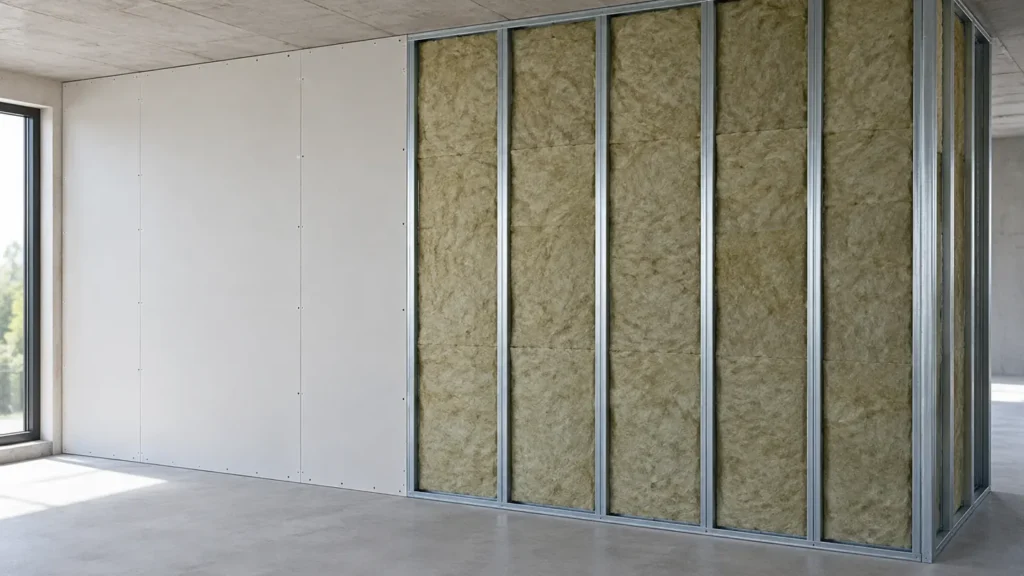
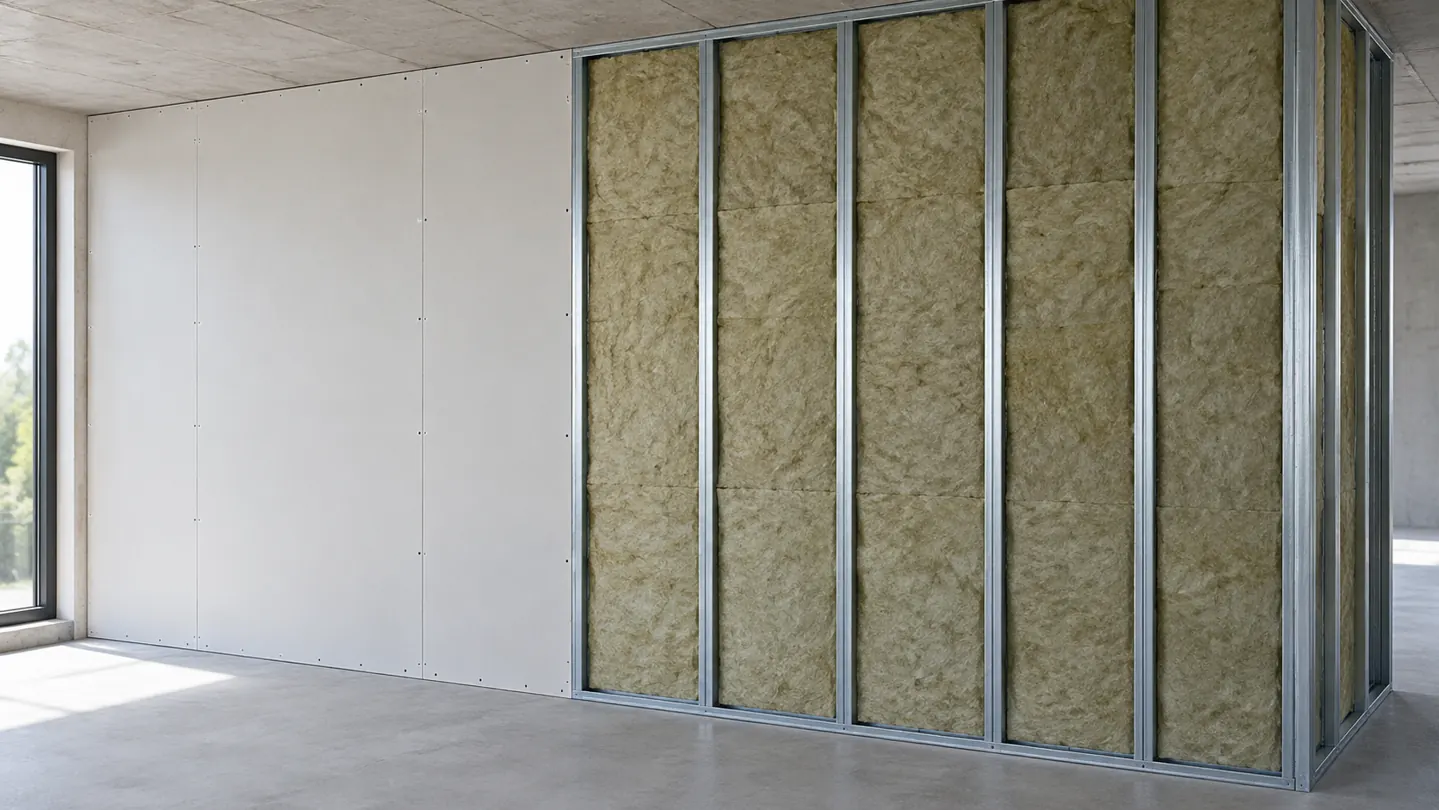
Acoustic performance belongs to a complete construction arrangement. Boards, framing, cavity insulation, fixing methods, junctions, and workmanship can all influence the result. A material description alone does not establish how a finished wall or floor will perform in your building.
ROCKWOOL’s acoustics resource hub provides guidance relevant to acoustic design and assessment. Request evidence applicable to the proposed assembly rather than transferring a performance claim from a different construction. Laboratory information also needs careful interpretation when considering the installed building.
Ask whether the proposal follows an identified tested arrangement and how any differences are being evaluated. Insulation density or thickness should not be treated as a universal shortcut to a predictable outcome. Equally, a wool material’s fire characteristics do not establish a fire rating for the entire assembly.
5. Investigate flanking paths and weak interfaces
Sound may bypass a separating wall through adjoining floors, ceilings, junctions, ducts, or other connected elements. This is why adding material to the most obvious surface can fail to resolve a complaint. Ask the assessor to identify likely direct and indirect routes before recommending extensive work.
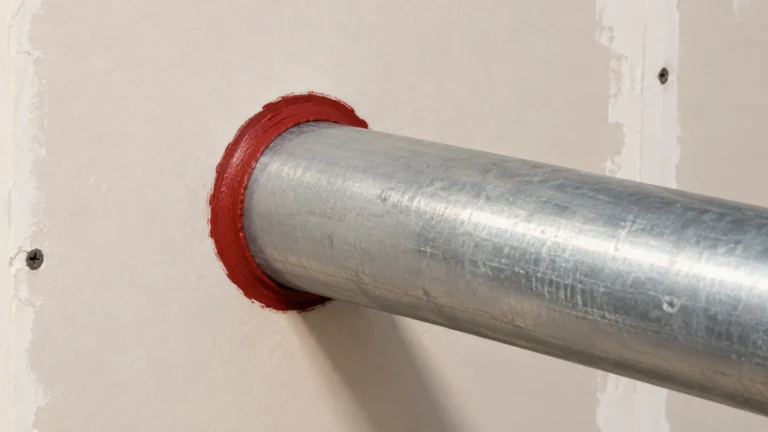
Doors and gaps also deserve scrutiny. A carefully specified wall can be undermined by a door assembly or an unaddressed perimeter. Services introduce further interfaces: outlets, pipe routes, access panels, and ventilation openings should be considered as part of the design.
The proposal should explain how these details will be coordinated with ventilation, accessibility, and other building requirements. Do not block essential air paths or alter electrical installations as an improvised noise remedy. Relevant specialists should resolve any conflicting requirements and document the agreed detail.
6. Coordinate acoustic insulation with the construction scope
Work involving acoustic insulation often touches more than one trade. A contractor may build the partition while others install doors, services, ceilings, or finishes. Define who owns the junction details and who checks them before they disappear behind finished surfaces. Otherwise, the intended performance can be lost through small changes made late in the job.
Discuss the consequences for room dimensions, access, floor transitions, and existing fittings. In refurbishment, opening selected areas may reveal constraints that were not visible during the initial visit. A sensible scope explains how such discoveries will be assessed and incorporated.
Owners reviewing related envelope decisions can use the guide to building insulation materials as background. Thermal and acoustic objectives can overlap, but each still needs evidence appropriate to its intended function.
7. Compare quotations by inclusions and evidence
Create a common scope for comparing acoustic insulation proposals. Request the proposed assembly, treatment of doors and penetrations, junction responsibilities, access arrangements, finishing work, and inspection stages. Ask suppliers to name any existing elements they assume are adequate. These assumptions can explain major differences between apparently similar offers.
Compare the documentation as carefully as the material list. A clear proposal distinguishes the design objective, available evidence, site limitations, and work needed to reach an agreed result. Be cautious when a supplier promises complete silence without addressing the actual building conditions.
For wider project coordination, review the construction services offered by Aloda. Discuss how acoustic requirements will be carried into drawings, procurement, installation checks, and handover so they remain visible throughout the work.
8. Decide when professional testing is appropriate
Testing may be useful where the outcome is important, the transmission paths are uncertain, or contractual acceptance needs a defined basis. An acoustics professional can advise on suitable assessment methods and explain the distinction between product information and measurements in the completed building.
Agree on the purpose before commissioning a test. Establish whether it is intended to diagnose an existing problem, support design choices, or assess completed work. Also define the relevant rooms and operating conditions, including any limitations that could affect interpretation.
Keep the result with the acoustic insulation construction records. If performance falls short of the agreed objective, the documentation should support investigation of the installation and its interfaces. Replacing materials without understanding the reason for the shortfall can repeat the same problem.
9. Close the project with a usable record
Handover should identify the installed arrangement, approved changes, and any photographs or inspection notes showing concealed details. Record specialist advice and relevant test findings alongside maintenance information for doors, seals, and accessible components. These records also help protect the intended performance during later alterations.
To discuss a planned project, contact Aloda Construction Company with your noise brief and available construction information.
Can acoustic insulation stop all noise?
No construction treatment should be assumed to eliminate every source or route. Its suitability depends on the agreed objective, the complete assembly, and the building conditions.
Will thicker insulation always provide a better result?
No. Thickness alone does not establish performance. Ask for evidence supporting the complete proposed arrangement and an explanation of how it addresses the relevant sound paths.
Can I add new outlets after the work is complete?
Discuss changes with qualified professionals first. New penetrations or altered details can affect acoustic continuity and other requirements. Keep the approved arrangement available so later work can be planned appropriately.