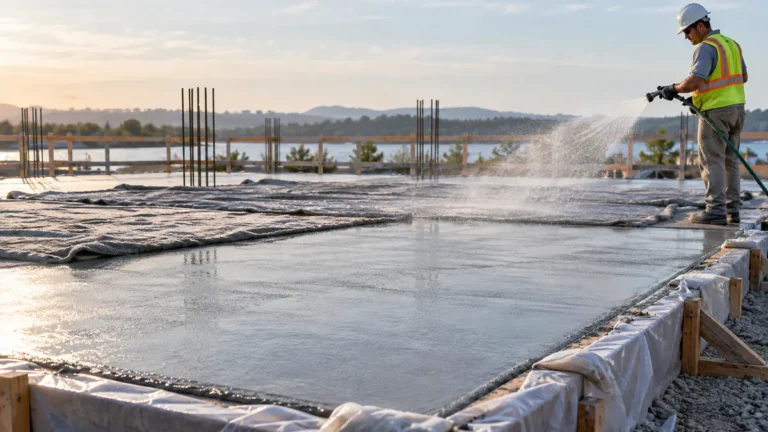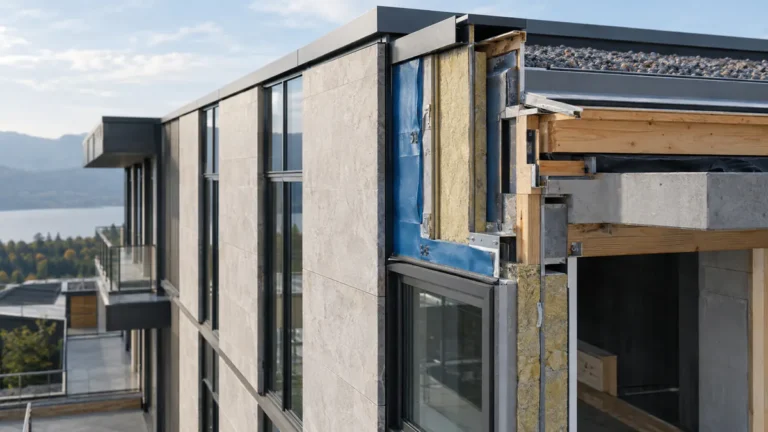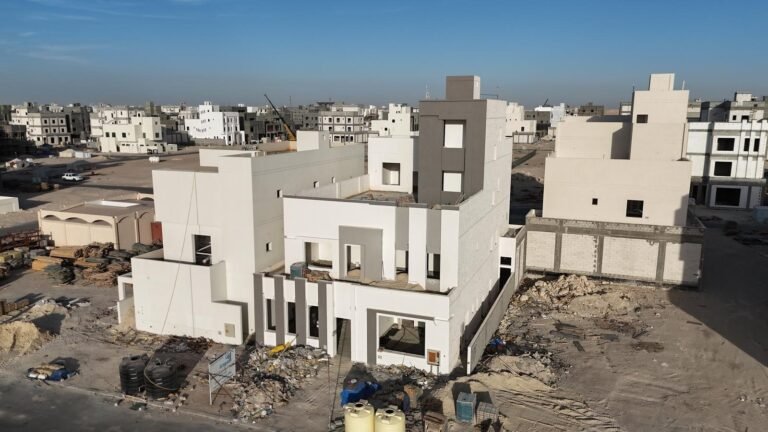
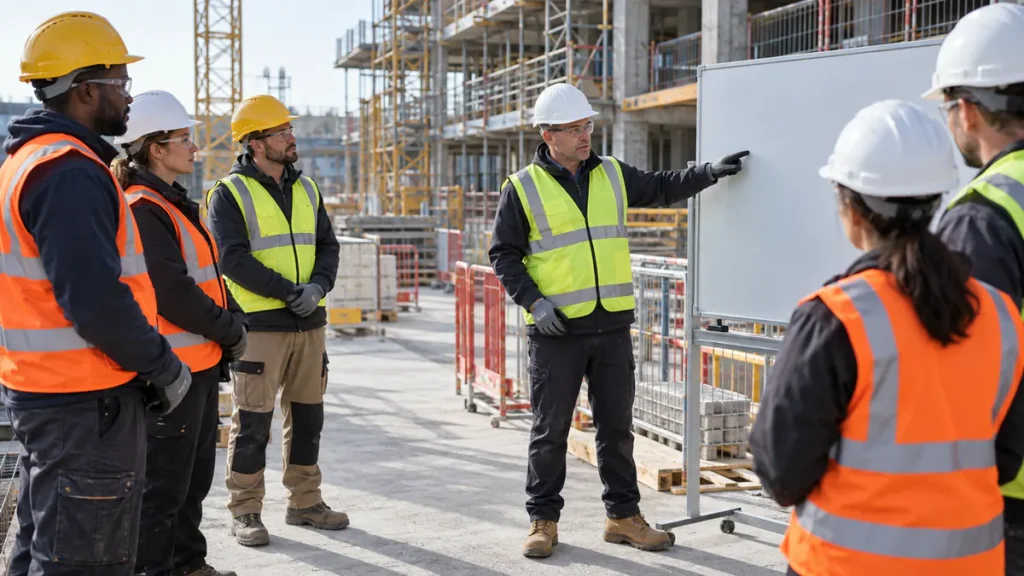
Construction site safety is the coordinated system used to identify hazards, control risk and protect workers, visitors and the public throughout a project. It combines planning, competent supervision, safe methods, reliable equipment, training, communication, inspection and emergency readiness. Safety is not achieved by personal protective equipment alone; the strongest programmes eliminate hazards where possible and build protection into design, logistics and work sequencing.
Table of Contents
Every site changes as excavation, structure, enclosure, services and finishes progress. Controls that were suitable yesterday may be inadequate after an opening is created, a crane route changes or several trades begin sharing the same area. Safety management must therefore be active and specific to the day’s tasks. The applicable laws and contract requirements vary by jurisdiction, so this guide offers a practical framework rather than replacing a project’s approved safety plan.
Who is responsible for construction site safety?
Employers and project organizations have formal duties defined by the relevant law and contract, but effective safety also requires clear responsibilities at every level. Management provides resources and sets expectations. Designers reduce foreseeable risk. Supervisors plan and control the work. Competent persons inspect defined hazards. Workers follow agreed methods, use equipment correctly and report changing conditions. Visitors must receive suitable induction and remain within authorized areas.
The Occupational Safety and Health Administration construction resources provide official standards and guidance for many construction hazards in the United States. Projects elsewhere should follow the local authority having jurisdiction, while using recognized guidance to strengthen internal systems where it does not conflict with legal requirements.
Use the hierarchy of controls
The hierarchy of controls ranks risk-reduction methods from more reliable to less reliable. Teams should start at the top and combine measures where a single control is insufficient.
- Eliminate: remove the hazard, such as assembling a component at ground level instead of working at height.
- Substitute: use a less hazardous material, process or item of plant.
- Engineering controls: isolate people through guardrails, covers, ventilation, barriers or machine guarding.
- Administrative controls: plan sequence, restrict access, issue permits, train workers and limit exposure time.
- Personal protective equipment: provide suitable head, eye, hearing, respiratory, hand, foot and fall protection.
PPE remains essential for many tasks, but it depends heavily on correct selection, fit and consistent use. A guardrail protecting everyone at an edge is generally more dependable than expecting each person to connect a lanyard perfectly every time. A task risk assessment should record why the chosen combination is suitable.
Construction site safety planning before mobilization
The project safety plan should address access, welfare, deliveries, lifting zones, temporary electricity, fire prevention, emergency response, medical support, public protection and communication. Site layout affects risk: separate pedestrians from vehicles, provide adequate lighting, avoid blind reversing routes and place storage so materials do not block exits or require unnecessary manual handling.
Before each activity, review the method statement and task risk assessment with the crew. Confirm the work area, sequence, interfaces, equipment, competent operators, permits and rescue provisions. If conditions differ from the plan, stop and revise it. The start-of-shift briefing should focus on actual changes and critical controls rather than repeat generic messages.
Essential construction site safety checklist
| Area | Questions to verify | Immediate concern |
|---|---|---|
| Access and housekeeping | Are routes lit, clear and separated from plant? | Blocked exit, unstable stack or sharp debris |
| Work at height | Are platforms, guardrails, openings and access complete? | Unprotected edge or incomplete scaffold |
| Excavations | Are support, access, spoil distance and services controlled? | Collapse signs, water entry or unsupported face |
| Plant and lifting | Are inspections, operators, exclusion zones and plans valid? | Person under suspended load or uncontrolled movement |
| Electricity | Are boards protected, cables sound and isolation controlled? | Exposed conductor, damaged lead or wet connection |
| Fire and hot work | Are combustibles controlled and permits and extinguishers ready? | Hot work without fire watch or emergency means |
Inspections should record location, condition, responsible person and due date. A severe and immediate danger requires the area to be made safe before work continues. Lower-risk observations still need tracking, because repeated housekeeping or access issues can indicate weak planning and supervision.
Work at height
Plan to avoid work at height where practical, then prefer collective protection such as complete working platforms and guardrails. Scaffolds should be designed or selected for their duty, erected by competent people, inspected as required and tagged according to the site system. Ladders should be reserved for suitable short-duration, light work and placed on a firm base with secure access.
Floor openings, shafts and roof edges need secured covers or barriers that cannot be displaced. Where personal fall arrest is necessary, verify anchor strength, compatible equipment, clearance below and a prompt rescue plan. Issuing a harness without a suitable anchor and rescue arrangement does not create a complete system.
Excavation and underground services
Before excavation, review drawings, survey information and utility records, scan and mark the work area, and use safe trial-hole methods where required. An authorized competent person should evaluate soil, depth, adjacent loads, water, vibration and nearby structures to select sloping, benching, shoring or shielding. Safe access and egress must be maintained, and spoil and plant kept back according to the approved plan.
Inspect excavations before each shift and after rain, vibration, support changes or any event that could affect stability. Warning signs include cracking, bulging, falling material, water inflow and movement of supports. Nobody should enter an excavation that lacks the required protection simply because the task will take only a minute.
Plant, vehicles and lifting operations
Separate vehicle and pedestrian paths with physical barriers where possible. Define speed limits, one-way systems, delivery time slots, banksman responsibilities and parking areas. Operators need authorization and daily pre-use checks, while defective plant must be isolated. Cameras and alarms support awareness but do not replace route design and exclusion zones.
Lifting operations require suitable equipment, competent personnel and a plan proportionate to complexity. Verify load weight and centre of gravity, crane configuration, ground capacity, accessories, weather limits, communication and landing area. Never allow people beneath suspended loads. Tag lines should be used only when appropriate and without creating entanglement risk.
Electrical, fire and hazardous-material controls
Temporary electrical systems should be designed, protected, inspected and maintained by qualified personnel. Use suitable distribution equipment and protection, route cables away from damage and water, and apply lockout or isolation procedures before maintenance. Improvised connections and repeated resetting of a protective device are warning signs, not production solutions.
Control ignition sources, combustible storage, temporary heating, gas cylinders and waste. Hot-work permits should confirm area preparation, isolation, fire extinguishers and post-work monitoring. Maintain alarm, muster and emergency access arrangements as the building closes in. Hazardous substances need labels, safety data, correct storage, exposure controls and worker training. Dust-generating work may require wet methods, extraction or suitable respiratory protection after assessment.
Communication, competence and worker participation
Induction should cover project-specific rules, emergency actions, reporting routes and restricted activities. Training must match the worker’s role and be understood; translation, demonstrations and practical verification may be needed. Supervisors should confirm competence before assigning equipment or high-risk tasks.
Workers often see changing conditions first. Provide a trusted way to report hazards and near misses without fear of blame. Investigate events to improve the system, not only to identify an individual error. Share short lessons across crews and confirm whether similar exposure exists elsewhere on the project.
Emergency and rescue planning
A generic emergency phone number is not a rescue plan. Identify plausible scenarios such as fire, fall arrest, excavation collapse, confined-space incident, electrical contact and medical emergency. Define who raises the alarm, who controls the area, what trained rescuers and equipment are available, and how emergency services reach the exact location.
Routes, muster points and contact details must change with the site. Run drills, record results and correct weaknesses. Rescue plans for fall arrest or confined spaces should be in place before exposure begins, because suspension or hazardous atmospheres may not allow time to invent a response.
Measuring safety performance
Injury rates are important but lag after harm occurs. Leading indicators provide earlier information: risk assessments reviewed, critical controls verified, inspections closed on time, training competence confirmed, near misses reported and supervisor engagements completed. Quality matters more than raw counts. Ten superficial inspections are less useful than one inspection that identifies and removes a serious repeated hazard.
Coordinate construction site safety with production and the stages of building construction. Short-term programme pressure should not be allowed to bypass permits, temporary works review or required inspections. Safe planning often improves flow by reducing congestion, rework and unplanned stoppages.
Frequently asked questions about construction site safety
What is the most effective safety control?
Eliminating the hazard is generally the most reliable option. When elimination is not feasible, use substitution, engineering and administrative controls before relying mainly on PPE.
How often should a construction site be inspected?
Inspection frequency should reflect law, project rules and risk. High-risk and rapidly changing areas may need checks before each shift, after changes and continuously during critical operations.
What should happen when an immediate danger is found?
Stop the affected work, keep people out, make the condition safe and have a competent person confirm the required correction before restarting. Record and investigate the event where required.
Is PPE enough to control construction hazards?
No. PPE is the last level in the hierarchy and depends on correct selection, fit and use. More reliable controls should eliminate or isolate the hazard whenever reasonably achievable.
Why are near misses important?
A near miss reveals a control failure without the final harmful outcome. Investigating it can prevent a later incident involving the same equipment, location, sequence or supervision gap.
Conclusion
Strong construction site safety comes from designing out hazards, verifying critical controls and adapting the plan as the project changes. Clear roles, competent supervision, worker participation and disciplined emergency preparation turn policy into safe daily work. For a construction approach that coordinates safety, quality and execution, explore Aloda Construction Company services or contact the team.