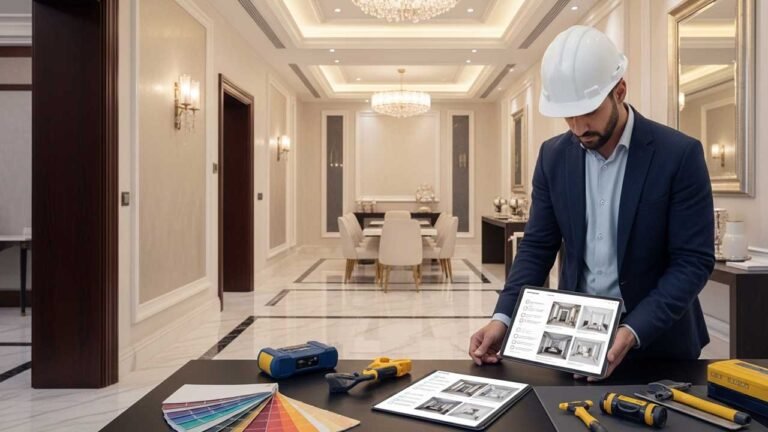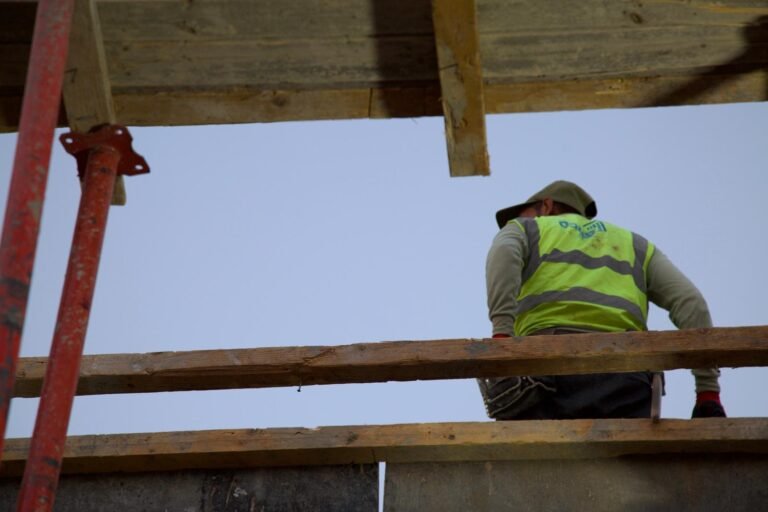
The journey of building a dream home or any investment project is one of life’s most exciting experiences. However, it can also be fraught with risk and anxiety if not managed professionally. Amidst complex construction processes and overlapping responsibilities between the owner, consultant, and contractor, documenting execution stages emerges as a lifeline and a safety valve that guarantees everyone’s rights. At Aloda Construction Company, with over 18 years of experience in the Kuwaiti market, we believe that human memory may fail, but documents and photos never lie. Absolute transparency through precise documentation is not just an administrative procedure; it is the essence of mutual trust and a fundamental pillar for the success of any engineering project.
How to Document Execution Stages
The contracting sector often faces challenges related to differing viewpoints during or after work completion. An owner might claim a deficiency in the specifications of a certain material, or a contractor might insist they performed additional work deserving of extra pay. This is where the true value of documenting execution stages shines; it transforms the project from mere verbal agreements or static blueprints into a living, historical record that proves every nail driven and every yard of concrete poured. In this article, we dive deep into this vital process to explain how reports and photos can serve as your primary advocate and the faithful guardian of your investment.
The Importance of Documentation in the Kuwaiti Construction Environment
The construction market in Kuwait is highly unique, with work stages often overlapping quickly due to climatic conditions and the need to complete tasks within specific seasons. The absence of documentation under such pressure can lead to the loss of core rights. Documenting execution stages is not limited to taking random photos; it is an organized methodology aimed at monitoring quality, quantities, and time.
Furthermore, documentation is an effective oversight tool. Owners who cannot be on-site daily due to busy schedules can use documented reports to follow their property and ensure work is proceeding according to the timeline. For us at Aloda Construction Company, documentation is our language for communicating with the client, allowing us to say with definitive proof: “We are executing exactly what we promised with extreme precision.”
Photographic Documentation: A Picture is Worth a Thousand Words
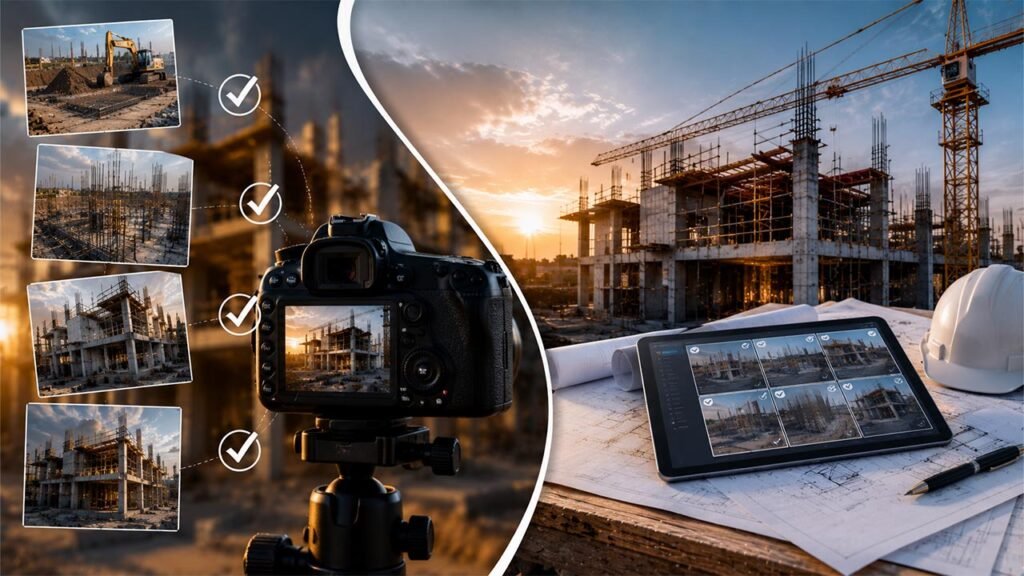
Photographs and videos are the most credible silent witnesses on-site. When documenting execution stages via photos, specific engineering standards must be followed for the images to hold legal and technical weight:
- Documenting Hidden Works: This is the most critical part of construction. Rebar inside foundations, electrical and plumbing installations inside walls or under floors, and buried insulation layers. Once concrete is poured or ceramics are installed, these works disappear forever. Documenting them with clear photos before they are covered ensures the owner that the contractor used the agreed-upon materials and quantities.
- Contextual Photos: It is not enough to take a close-up of a small detail; wide shots showing the work location and date are necessary, followed by medium shots showing the relationship between elements, and finally close-ups for fine details.
- Digital Datestamps: Photos must automatically carry a date and time stamp to serve as an unquestionable chronological reference in the event of any delay or dispute regarding execution timing.
Daily and Weekly Technical Reports
Alongside photos, written reports form the backbone of documenting execution stages. The daily report acts as the “black box” of the project. A professional report provided by Aloda Construction Company contains precise details including:
- Weather Conditions: Temperature, humidity, or dust levels, as these factors affect the quality of concrete and painting and sometimes justify a forced work stoppage.
- Manpower: The number of workers and technicians present on-site, reflecting the contractor’s seriousness in adhering to the schedule.
- Supplied Materials: Documenting the entry of building materials (steel, bricks, cement) and their compliance with the specifications approved in the contract.
- Actual Progress: A precise description of what was accomplished during the day (e.g., completion of plastering in the master bedroom, installation of 50 meters of cabling).
| What the daily report records | Why it belongs there |
|---|---|
| Weather conditions | Temperature, humidity and dust affect the quality of concrete and painting — and sometimes justify a forced stoppage |
| Manpower on site | The number of workers and technicians present, which is what adherence to the schedule actually looks like day to day |
| Materials supplied | Steel, bricks and cement logged on entry, against the specifications approved in the contract |
| Actual progress | A precise description of what was completed that day, not a percentage estimate |
Protecting Rights in Financial Disputes
Most disputes in the contracting world arise over financial matters and “Variation Orders.” An owner often requests modifications during the work—such as changing a wall location or adding electrical points—and may forget these requests during the final settlement.
Documenting execution stages for these changes, through signed request forms and “before and after” photos, guarantees the contractor’s right to claim the price difference and ensures the owner is not charged for unearned amounts. Documentation acts as a scale of justice that regulates invoices and makes the final settlement a smooth process free of friction.
Documentation as a Reference for Future Maintenance
A contractor’s relationship with the project ends at handover, but the owner’s relationship with the home lasts a lifetime. Years later, you may need maintenance or an expansion, and this is where the value of documenting execution stages peaks.
Imagine wanting to drill into a wall to hang a painting or install a shelf, and fearing you might hit a water pipe or electrical cable. Referring back to the “photo archive” and reports handed to you by Aloda Construction Company will show you exactly where the hidden installations lie. This archive is your home’s “catalog,” saving you thousands of Dinars in random demolition and incorrect future repairs.
Digital Technology in Documentation
Documentation is no longer limited to paper and pens. We live in the era of digital transformation, and using technology enhances the accuracy of documenting execution stages:
- Cloud Platforms: Uploading photos and reports instantly to a shared folder (Google Drive or Dropbox) allows the owner and supervising engineer to view updates in real-time from anywhere in the world.
- Project Management Apps: Using specialized applications allows for the recording of voice and visual notes, linking them directly to engineering blueprints.
- Drone Photography: For large projects, we use drones to photograph the site from above, providing a comprehensive view of progress on roofs, exterior facades, and gardens.
Documentation and Quality Control (QA/QC)
Documentation is closely linked to quality control. When the on-site team knows that every step is subject to documenting execution stages and precise photography, it creates an internal incentive to adhere to the highest quality standards. A worker cannot hide a defect in insulation or use a weak cement mix if they know the camera will document their work before moving to the next stage. This oversight system significantly reduces manufacturing defects and guarantees the owner a sturdy home free from “commercial fraud.”
Why is Aloda Construction Company the Ideal Model?
Our strength at Aloda Construction Company lies in the fact that we do not view documentation as an extra burden, but as an inherent part of our corporate culture. 18 years of experience have taught us that a comfortable client is a reassured client. At the end of the project, we provide our clients with a “Handover Package,” which is not just keys, but a treasure trove of information including:
- A flash drive containing all project photos and videos arranged chronologically.
- A copy of all periodic reports and laboratory tests for materials.
- As-Built Drawings showing modifications made to the original blueprints.
- Material warranties and guarantee certificates.
Conclusion: Peace of Mind Starts with Documentation
In conclusion, we must realize that a construction contract is the beginning of a partnership, but documentation is what maintains its continuity and success. Documenting execution stages is not just for memory’s sake; it is a legal protection strategy, a financial guarantee, and an indispensable technical reference.
Whether you are building a small house or a commercial complex, do not compromise your right to receive documented reports for every step. Choose a contractor who possesses the transparency and technical capability to put you at the heart of the action. We at Aloda Construction Company promise to be your sleepless eye and your honest hand that builds and documents, delivering a key to a home built on foundations of trust and clarity. Contact us today, and let us build your future on solid, documented ground.
Quick Answers
Which works matter most to photograph?
The hidden ones. Rebar inside foundations, electrical and plumbing runs inside walls and under floors, and buried insulation layers. Once concrete is poured or ceramics are laid, those works disappear permanently — the photograph taken before they were covered is the only remaining evidence of what was used.
What makes a site photograph hold technical weight?
Context and a timestamp. A close-up of a detail alone proves little: the set needs a wide shot establishing location, a medium shot showing how elements relate, and then the close-up — each carrying an automatic digital datestamp.
How does documentation protect the owner financially?
It replaces recollection with record. Most disputes are one party claiming a specification was not met and the other claiming extra work was done. Dated photographs, logged material deliveries and a daily progress record turn both claims into questions of fact.